
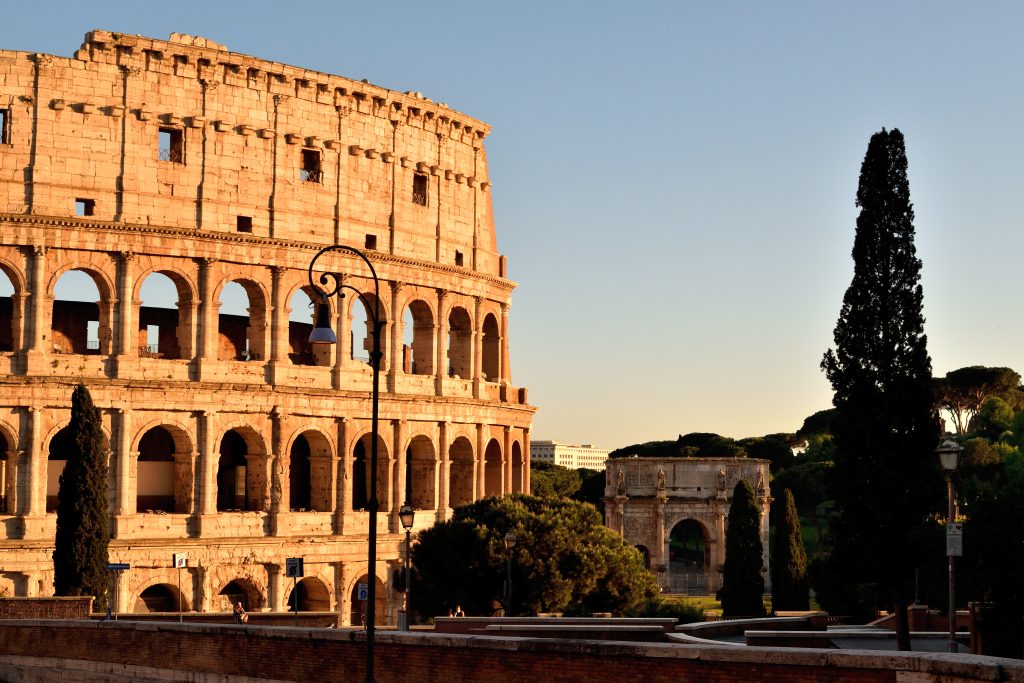
The Colosseum was not just an arena for gladiators or a simple place where performances were held; it was and is also an open-air work of art, decorated with beautiful statues and sculptures, as well as being almost entirely covered in marble.
The Colosseum, in fact, was a work designed to give luster to the Flavian dynasty and to bring the figure of the emperor closer to the people: considering the bad period experienced under Nero there was a need to restore luster to the figure of the emperor.
Have you ever heard of the statues that once adorned the Colosseum?
Today they are almost all gone, but their history is fascinating!
Find out how many there were, where they were, and what has become of them. Read on to explore the history and mystery of the Colosseum’s beautiful statues.
ALT! Want to see the artistic remains of the Colosseum up close? Book your tickets and immerse yourself in its thousand-year history! Don’t waste time in line, make sure you get in on the day and time you want by purchasing your ticket here.
The best-selling
Colosseum and Roman Forum Ticket + Audio Guide
Fast-track access and audio guide included: explore Colosseum and Roman Forum with one ticket.
from 25€
Full Ticket
Secure payment
Instant confirmation
Mobile ticket
The statues in the Colosseum: how many were there?
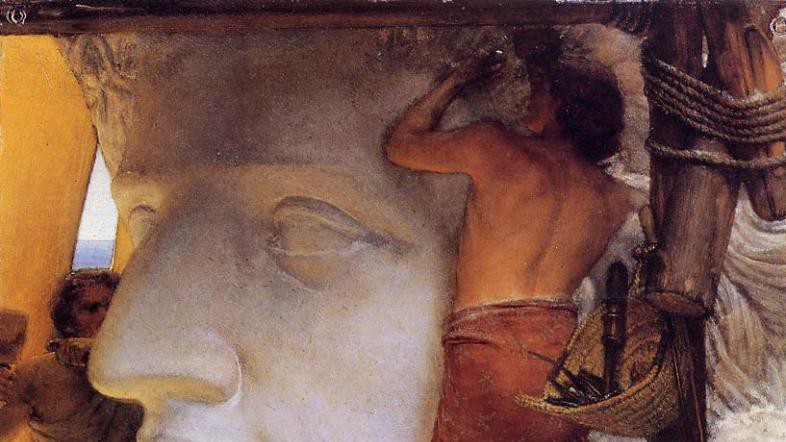
Sculptors in ancient Rome painted by Lawrence Alma-Tadema
An ornate and imposing Colosseum
As we said, the Flavian amphitheater was not just an arena, but a lavishly decorated building: it was in fact meant to bring prestige to the dynasty that ordered its construction.
There were many characters depicted by the statues in the Colosseum: gods, heroes and demigods. These statues were placed in the perimeter arches of the second and third orders.
Some important aristocratic figures in Roman society were allowed to have their portraits in the first order of the Colosseum, while the imperial family saw their portraits adorning the imperial box.
It is estimated that there were 156 statues placed in the various levels of the arena. How did historians know about the presence of statues? A relief by the Haterii dating to the first century A.D. shows us an image of an amphitheater decorated with many statues, and the same was found on some ancient coins.
Where were the statues located in the Colosseum?
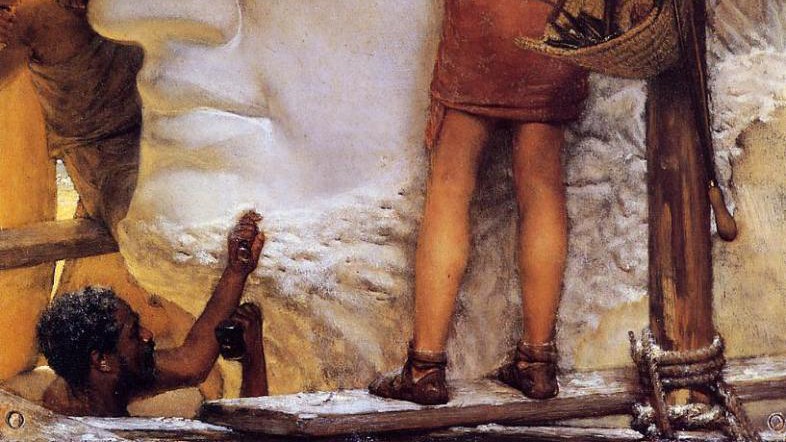
Sculptors in ancient Rome painted by Lawrence Alma-Tadema
In the outer arches
Each exterior arch had several niches designed to house monumental statues that served as artistic ornamentation to the splendid building.
The Colosseum, in fact, was designed as an open-air museum, a boast for the city, and therefore could not lack a strong artistic component.
The statues present were connected to the myth of Rome’s history and represented precisely Roman gods, mythological heroes and emperors.
In the inner corridors
The interior passageways were also embellished with busts and reliefs dedicated to the gods of war and victory: it must be considered that the Colosseum and the games organized within it were meant to increase consensus among the population in favor of the emperor and served as a tool of political propaganda.
Finally, some of the statues are thought to have been placed along the stairways, creating an impressive scenic effect for those who climbed up and stood in front of them, thus feeling overpowered.
The absolute best-selling
Colosseum and Roman Forum Ticket + Audio Guide
Fast-track access and audio guide included: explore Colosseum and Roman Forum with one ticket.
from 25€
Full Ticket
Secure payment
Instant confirmation
Mobile ticket
What happened to the statues in the Colosseum?

Model of the original Colosseum
Looting, earthquakes, and reuse
Many of the statues were destroyed in the centuries following the fall of the Roman Empire, especially due to the earthquakes that struck the monument.
But it was not only cataclysms that damaged and broke the statues: many were looted and their material reused for other purposes.
One must consider that it was not easy to find marble and the cost of this material could be really high.
In addition, after the collapse of the Roman Empire, the Colosseum lost its importance, but it was used for different purposes: for example, it was used as a fortress, a dwelling, a stable, and a burial place.
Museums where to see the remains
Capitoline Museums: Some fragments of sculptures from the Colosseum can be admired inside the Capitoline Museums. A popular tourist site for tourists in Rome and, according to most of them, a must-see.
National Roman Museum: This museum displays Roman artwork similar to that which once decorated the amphitheater: here you can admire these works and get an idea of what the Colosseum might have looked like.
Vatican and Louvre: finally, historians do not rule out that some sculptures may have ended up in private collections or international museums.
Frequently asked questions
According to historians, the Colosseum had 156 statues placed mostly along the second and third order of the outer arch.
The statue next to the Colosseum was about 35 meters tall and depicted Nero. It is thought that the name of the amphitheater comes from this Colossus.
These are 28 statues placed on the ground floor between the arches: they represent the allegory of the virtues of the Italian people, such as heroism, philosophy, history, craftsmanship, etc.
The Colosseum is itself a symbol, certainly of the city of Rome but especially of the most famous ancient civilization and empire in history!
Conclusion

Findings preserved inside the Colosseum
So here we have come to the concluding part of this article. We have discovered together how many statues decorated the Colosseum, where they were located and why they disappeared.
I then showed you where you can see the remains today of these incredible statues and finally answered the most common questions inherent in these incredible pieces of art and history.
Should you have any other questions, please feel free to leave us a message below-we will be happy to answer them!
Are you fascinated by the hidden art of the Colosseum? Did you know about the existence of the statues? Share your thoughts in the comments and tell us yours!
And for an unforgettable experience among the wonders of the world’s most famous amphitheater, book your tickets now and discover the thousand-year history of the Colosseum!
The best-selling
Colosseum and Roman Forum Ticket + Audio Guide
Fast-track access and audio guide included: explore Colosseum and Roman Forum with one ticket.
from 25€
Full Ticket
Secure payment
Instant confirmation
Mobile ticket
Cover: ID 27353050 © Scaliger | Dreamstime.com
