
The Colosseum is Rome’s most iconic monument and one of the most visited in the world, but behind its imposing structure lie fascinating stories, legends and secrets that few people know.
In this article you will discover 10 incredible facts about the Colosseum, from its ancient battles to the mysteries that still shroud it today. I am sure that after reading this article you will be even more fascinated by this wonderful amphitheater!
ALT! Are you already convinced that you want to visit it even before you discover its secrets? Then let me give you some advice: buy your ticket online to skip the line and get many benefits, and discover the Colosseum’s stress-free charm live!
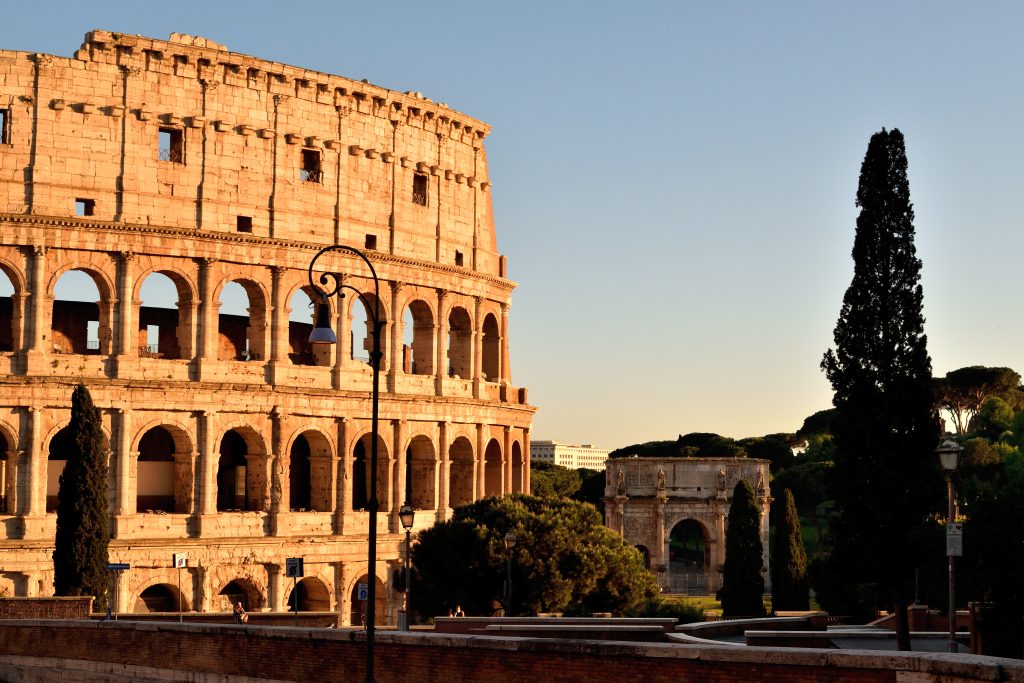
The best-selling
Colosseum and Roman Forum Ticket + Audio Guide
Fast-track access and audio guide included: explore Colosseum and Roman Forum with one ticket.
from 25€
Full Ticket
Secure payment
Instant confirmation
Mobile ticket
10 interesting facts about the Colosseum
The Colosseum is not really called “Coliseum”

Ancient view of the Colosseum
The Colosseum’s real name is Flavian Amphitheater, that’s how the Romans called it when it was built.
The name comes from the imperial dynasty that built it, namely the Flavian dynasty: in fact, it was Vespasian and his sons Titus and Domitian who gave this monument to the eternal city.
The term “Colosseum” probably comes from the gigantic statue of the Colossus of Nero, which once stood in the vicinity of the amphitheater.
It was from the Middle Ages onward that this name became widespread, partly because the Colosseum gradually lost its function as a theater for large events.
Just think that starting in the Renaissance, the name Colosseum even began to circulate in official documents!
The Colosseum was not always an arena for fighting
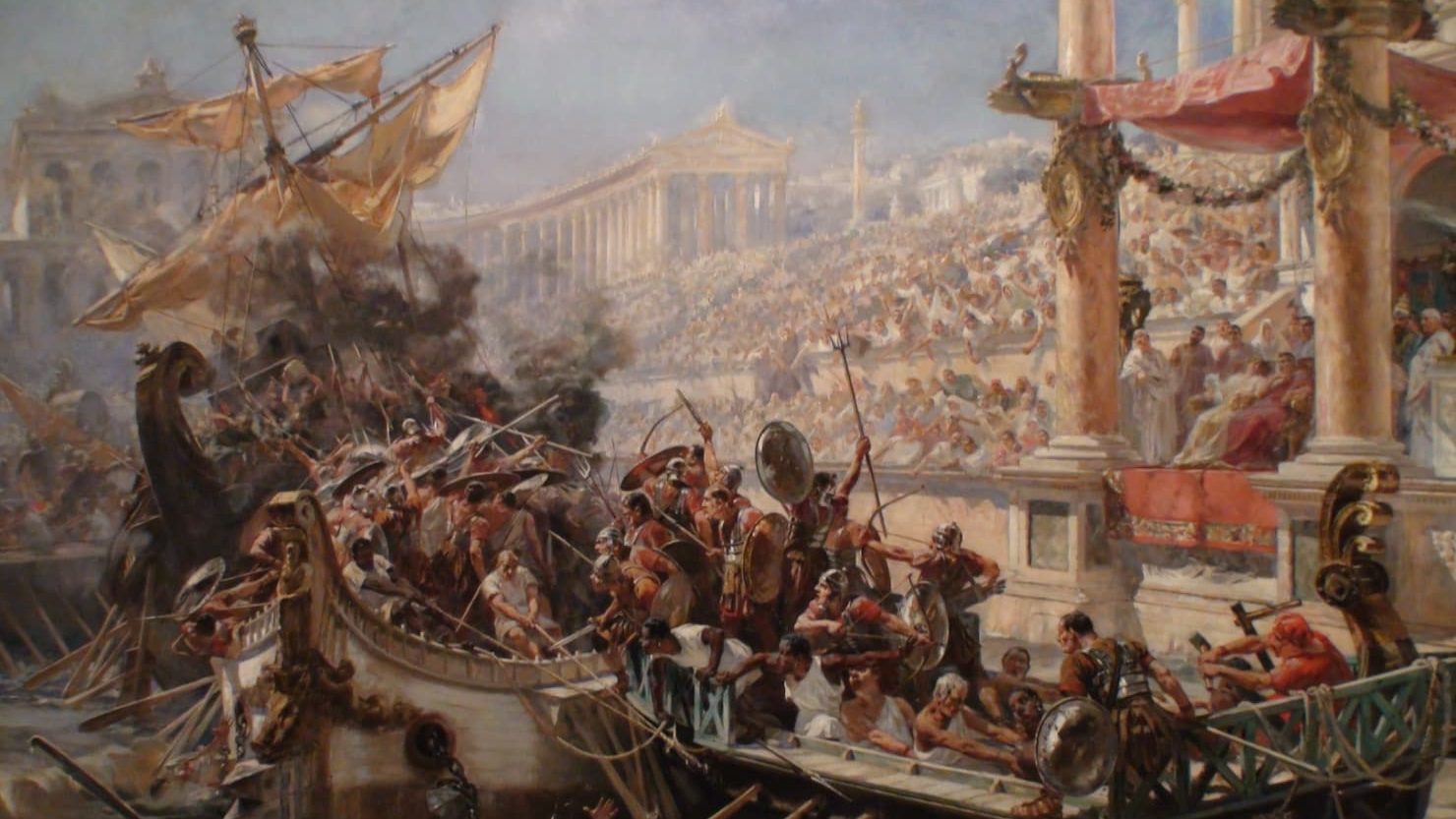
Naumachia, from a painting by Ulpiano Checa
Not only fights to the death! Besides the famous gladiator battles, theatrical performances, public executions, and hunts with exotic animals were also held in the Colosseum.
The shows at the Colosseum were organized just like inside a theater, in fact, the dungeons, built by Domitian below the arena, functioned as a “backstage”: a system of hoists and trapdoors allowed animals and parts of the set to appear on the “stage” in a sudden manner, stunning the audience.
There were many insiders present in this area, and the purpose was to make sure that the events were scenically successful.
On some occasions, the arena was even flooded in order to stage naval battles: the name of these spectacles was naumachiae and comes from the Greek word meaning precisely naval battles.
They were usually organized in specially dug basins or in open water, so it was truly amazing for the Romans to witness such a spectacle inside the Colosseum.
However, there were not many naumachiae inside the amphitheater, as after the construction of the undergrounds it was no longer possible to organize them.
The Flavian Amphitheater could accommodate more than 50,000 spectators
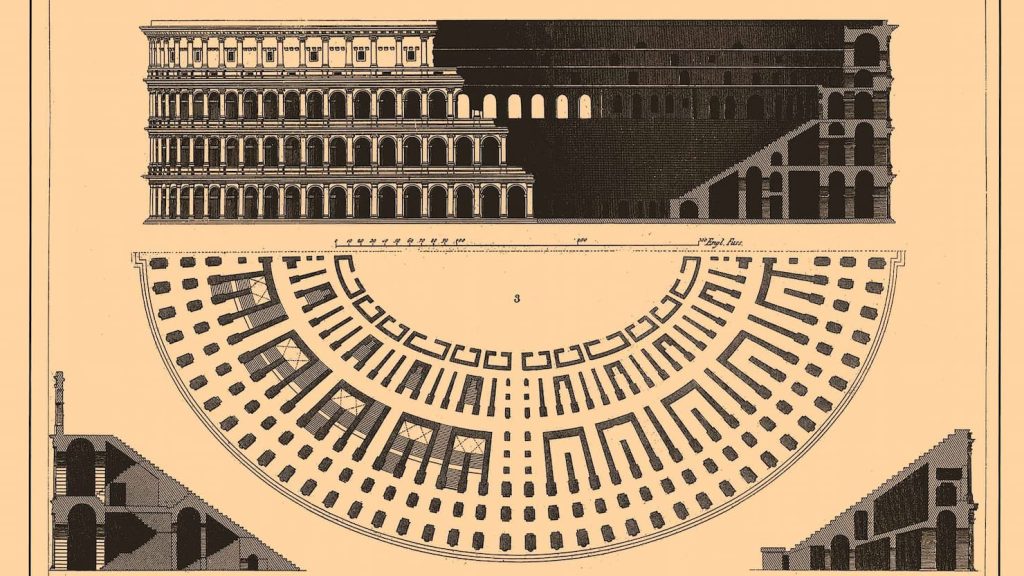
Coliseum Plan by Brockhaus & Efron Encyclopedic Dictionary
The Colosseum was designed for mass entertainment: for emperors, the games were a time to cheer the populace, but also a valuable means of gaining acclaim.
It is believed that for Roman citizens, in fact, the shows were free and only foreigners had to pay for admission.
The Colosseum could accommodate an incredible number of spectators: it is reliably attested that the amphitheater held at least 50,000 people!
However, many historians believe it could hold as many as 75,000 spectators; moreover, the Colosseum was organized just like a modern stadium: an entrance and exit system so efficient that the entire arena could be emptied in a matter of minutes and ensured that spectators could easily reach their section. The division within the amphitheater was important, and to respect it, those attending the performances had to enter through a specific door that allowed them to get to the right seat: this prevented people from different social classes from mixing in the stands.
The basement had a sophisticated system of elevators and trapdoors
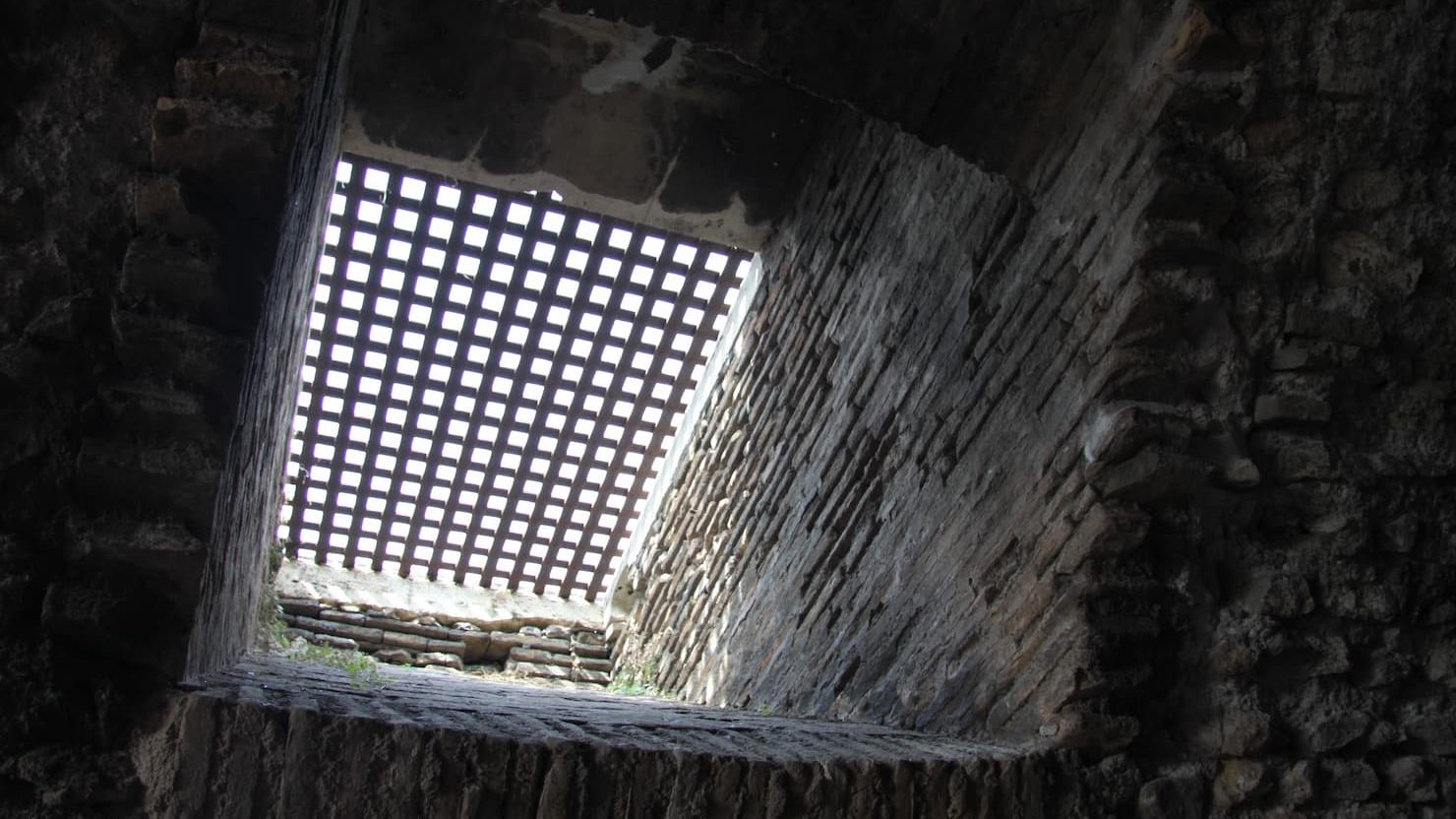
Under the arena | ID 46746415 @ Merlin1812 | Dreamstime.com
As I told you, the basement of the Colosseum was a real “backstage” area: it was here that a complex system of elevators and trapdoors was hidden, allowing animals, gladiators, and parts of the set design to suddenly appear in the arena, creating a spectacular effect for the audience.
A winch system operated by ropes allowed platforms to be raised to over 7 meters, and there were indeed many workers working under the arena.
The best-selling ever
Colosseum and Roman Forum Ticket + Audio Guide
Fast-track access and audio guide included: explore Colosseum and Roman Forum with one ticket.
from 25€
Full Ticket
Secure payment
Instant confirmation
Mobile ticket
The Colosseum was once covered with marble and precious decorations

Model of the original Colosseum
Today we see the Colosseum with its structure of brick and stone, travertine and tuff, but originally it was quite different!
The Colosseum was built to represent the splendor of the Flavian dynasty and was to become the crowning glory of Rome after the terrible Neronian interlude.
The amphitheater, therefore, was covered with white marble and decorated with statues and bas-reliefs: anyone who stood in the presence of this construction could not help but be amazed!
As the centuries passed, however, much of the marble was taken and reused for the construction of other buildings in Rome since the Colosseum had lost its splendor associated with the imperial period.
But not only marble, travertine was also taken: for example, during the Renaissance much material from the amphitheater was used to build Palazzo Venezia and Palazzo Barberini.
Material taken from the Colosseum was also used for St. Peter’s Basilica.
The Flavian Amphitheater has been affected by earthquakes and looting

Interior of the Colosseum, painted by Thomas Cole, 1832
Material from the Colosseum was not only officially used by new city managements.
Over the centuries, in fact, the Colosseum has suffered devastating earthquakes that caused large sections of its structure to collapse.
As a result of the earthquakes that damaged the structure, large parts of the stone were also easily taken away by private individuals for their own use-it was not common to find marble in the city!
The Colosseum became a veritable open-air quarry: columns containing metal grapples used by the Romans to stack the building blocks were also excavated.
The Colosseum is said to be haunted by ghosts
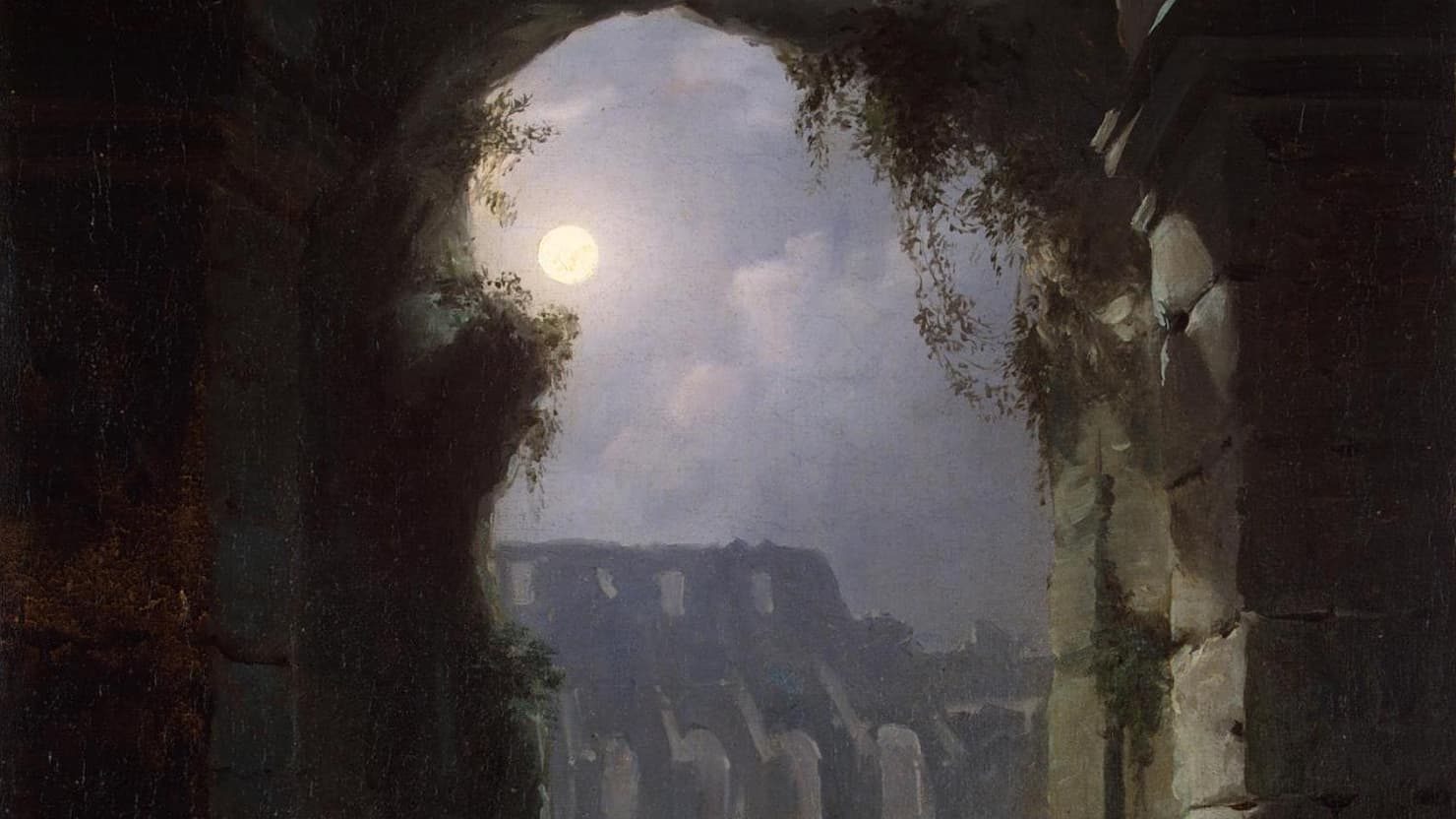
Abandoned Colosseum painted by Franz Ludwig Catel
According to many legends, the Colosseum is said to be inhabited by the ghosts of gladiators and the thousands who lost their lives in the arena.
Since the Middle Ages it was thought that this place hid a door leading to the underworld and that many pagans gathered here to perform mysterious rites.
Many visitors and janitors have reported strange noises, voices and unexplained apparitions, especially at night: legend has it that the ghost of Messalina in particular roams these parts!
This woman was a young matron forced by Caligula to marry her cousin Claudius, who was much older than her.
And do you believe it? Do you want to try spotting the ghost with your own eyes? Well, if so, I suggest you think about an evening or, even better, night tour!
In the Middle Ages, the Flavian Amphitheater was transformed into a fortress
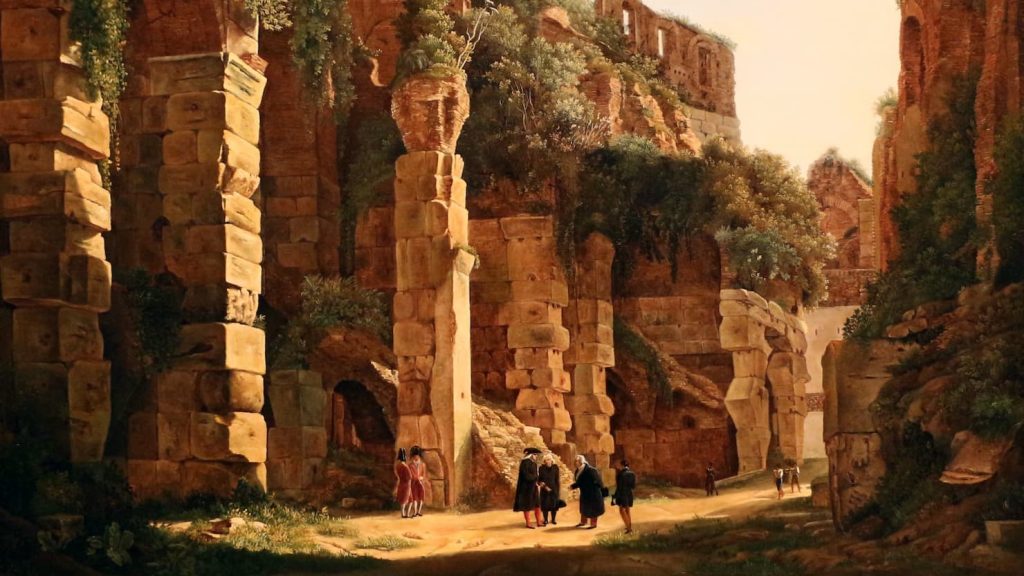
Interior of the Colosseum painted by Franz Ludwig Catel
After the fall of the Roman Empire, the Colosseum lost its original function and fell into disrepair.
Used for a wide variety of purposes, it also became the fortress of a powerful Roman noble family, who adapted it for defensive purposes.
This was the Frangipane family, who also built a wooden walkway that served for patrolling and defense.
Later, it was abandoned and became a kind of open quarry for building materials, also used by some as a makeshift dwelling or makeshift stable.
The Colosseum has been declared one of the 7 Wonders of the Modern World
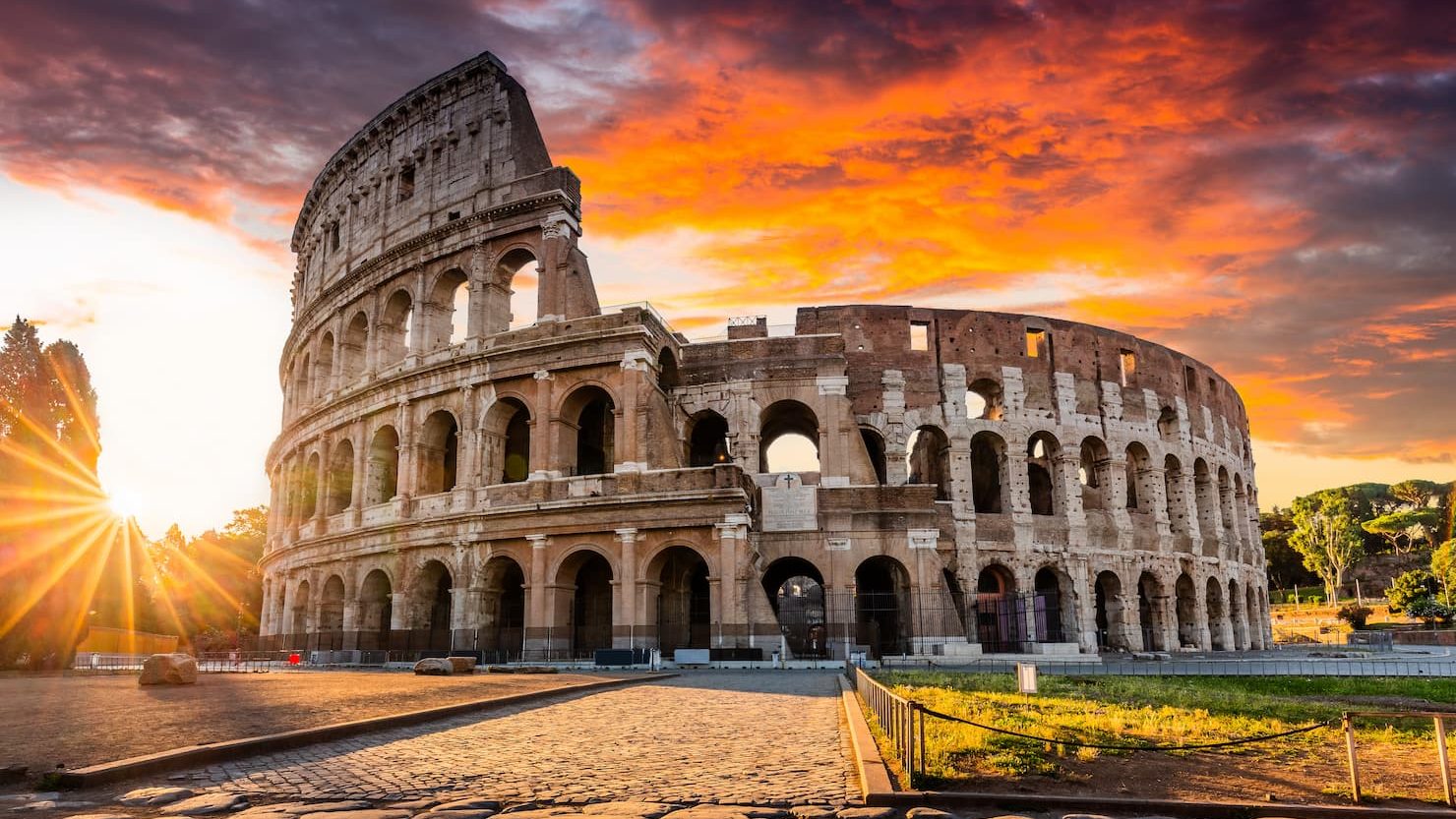
Front view of the Colosseum | ID 144201572 @ Sorin Colac | Dreamstime.com
In 2007, the Colosseum was officially listed among the New 7 Wonders of the World, along with the Great Wall of China, Petra, Machu Picchu and other world icons.
Even today, it is still one of the most visited tourist sites in the world, with millions of visitors each year.
A symbol of the Eternal City and of Italy as a whole, the Colosseum is also depicted on the boot’s five-cent coins . It has also been listed as a UNESCO World Heritage Site since 1980.
Every Good Friday, the Colosseum is illuminated as a symbol against the death penalty
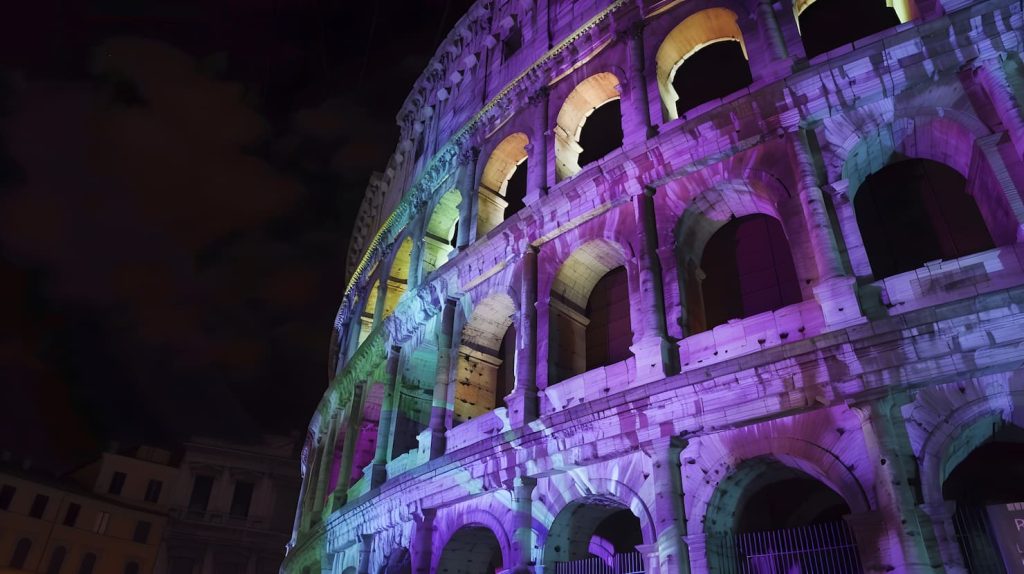
Illuminated facade of the Colosseum | ID 370961762 © Nelum Suranga Kumara | Dreamstime.com
Today, the Colosseum is a symbol of peace and justice: every year on Good Friday, it is illuminated in a special ceremony, desired by the Pope, as a sign of opposition to the death penalty in the world.
But not only this! Like many other world monuments, the Colosseum has been illuminated in different colors on special occasions, always for charitable purposes and to raise awareness of sensitive issues.
For example, in 2019 it was lit in red for the 50th anniversary of the AIL or in 2022 in purple to raise awareness of epilepsy.
Frequently asked questions
The Colosseum is the largest Roman amphitheater built and inside it hosted bloody shows that had gladiators as their subject. Commissioned by the Flavian dynasty, it was built between 72 and 80 AD and even hosted some naumachiae, or naval battles, inside. If you would like to learn more about the history of this wonderful monument, explore our other resources within the site!
In reality, it is impossible to give an actual death toll inside the Colosseum. However, historians have estimated that about 8,000 people per year died during the games.Overall, it is estimated that about 500,000 gladiators and over a million animals died.
The Colosseum is broken mainly because of several earthquakes that have damaged its structure. However, some damage can also be attributed to the looting it has suffered throughout history.
The Colosseum was filled with water through a very modern hydraulic system. The main aqueducts of the city were used, particularly that of Colle Celio, which was part of the Claudian aqueduct. It was the same one that Nero also used for his purposes in this area: it was how the artificial lake that stood where the Colosseum was later built was fed.
Conclusions
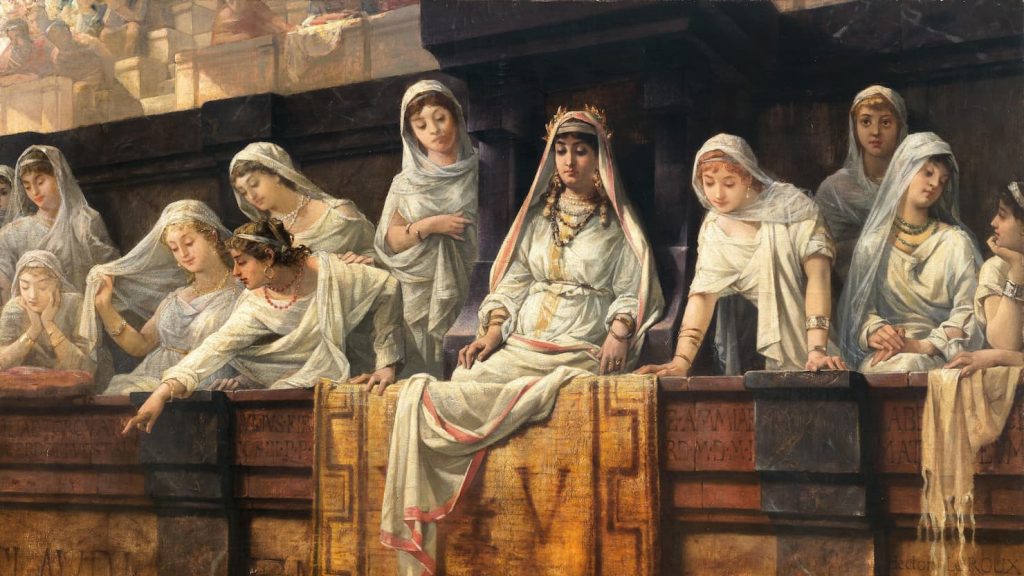
Vestal Virgins painted by Louis Hector Leroux
Well, we have come to the conclusion of this article that allowed us to discover many incredible curiosities related to the most famous monument in Italy!
The Colosseum, in fact, is not only an icon of ancient Rome, but a place full of history, mysteries and incredible curiosities. Every stone tells a story, every corner hides a legend.
Did you already know these incredible facts? Write them down in the comments!
Want to explore the Colosseum and discover its secrets live? Want to see how the underground lifts worked? Book your ticket, but be careful: if you encounter any ghosts, don’t say we didn’t warn you!
The best-selling
Colosseum and Roman Forum Ticket + Audio Guide
Fast-track access and audio guide included: explore Colosseum and Roman Forum with one ticket.
from 25€
Full Ticket
Secure payment
Instant confirmation
Mobile ticket
